Loading
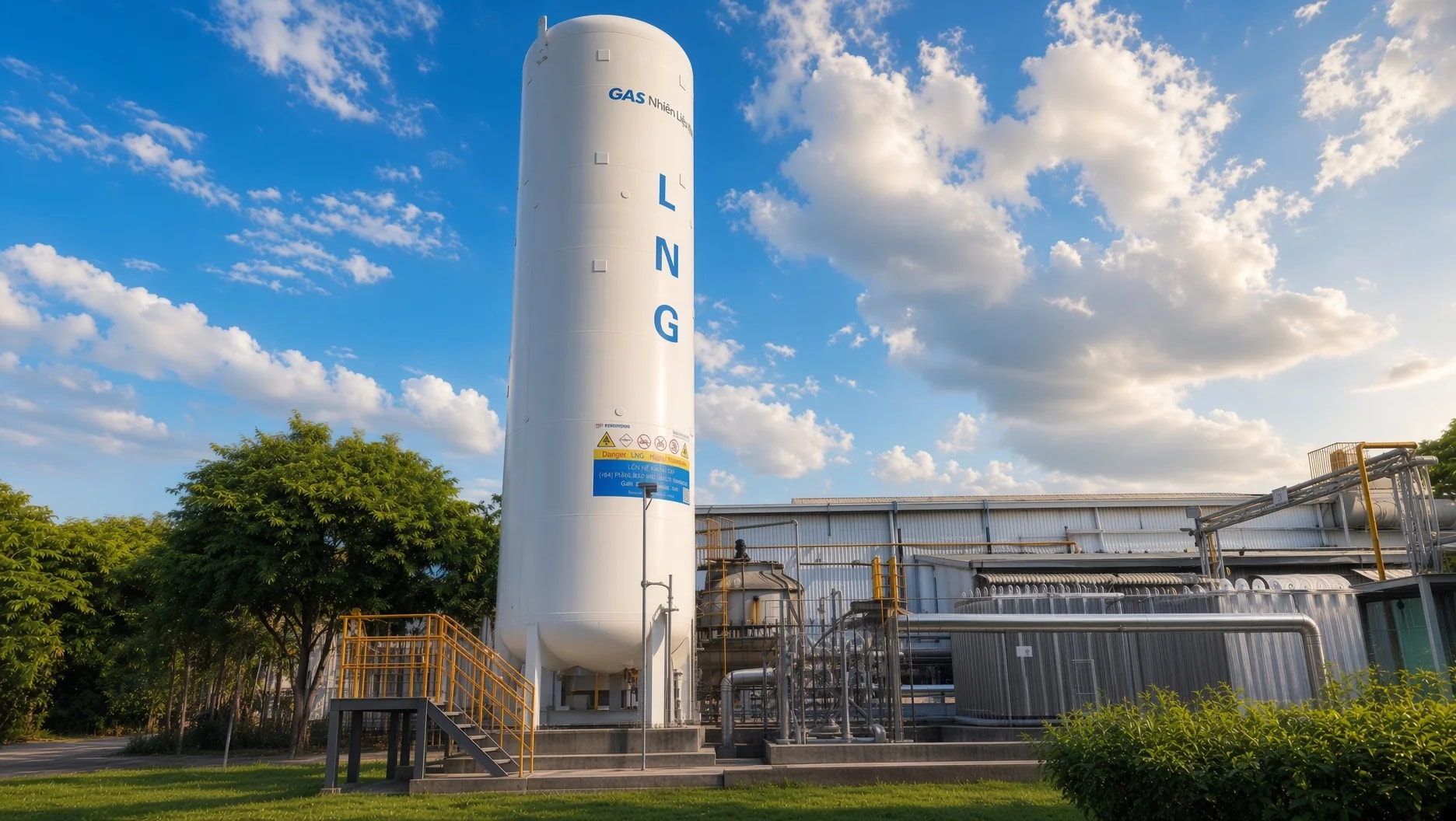
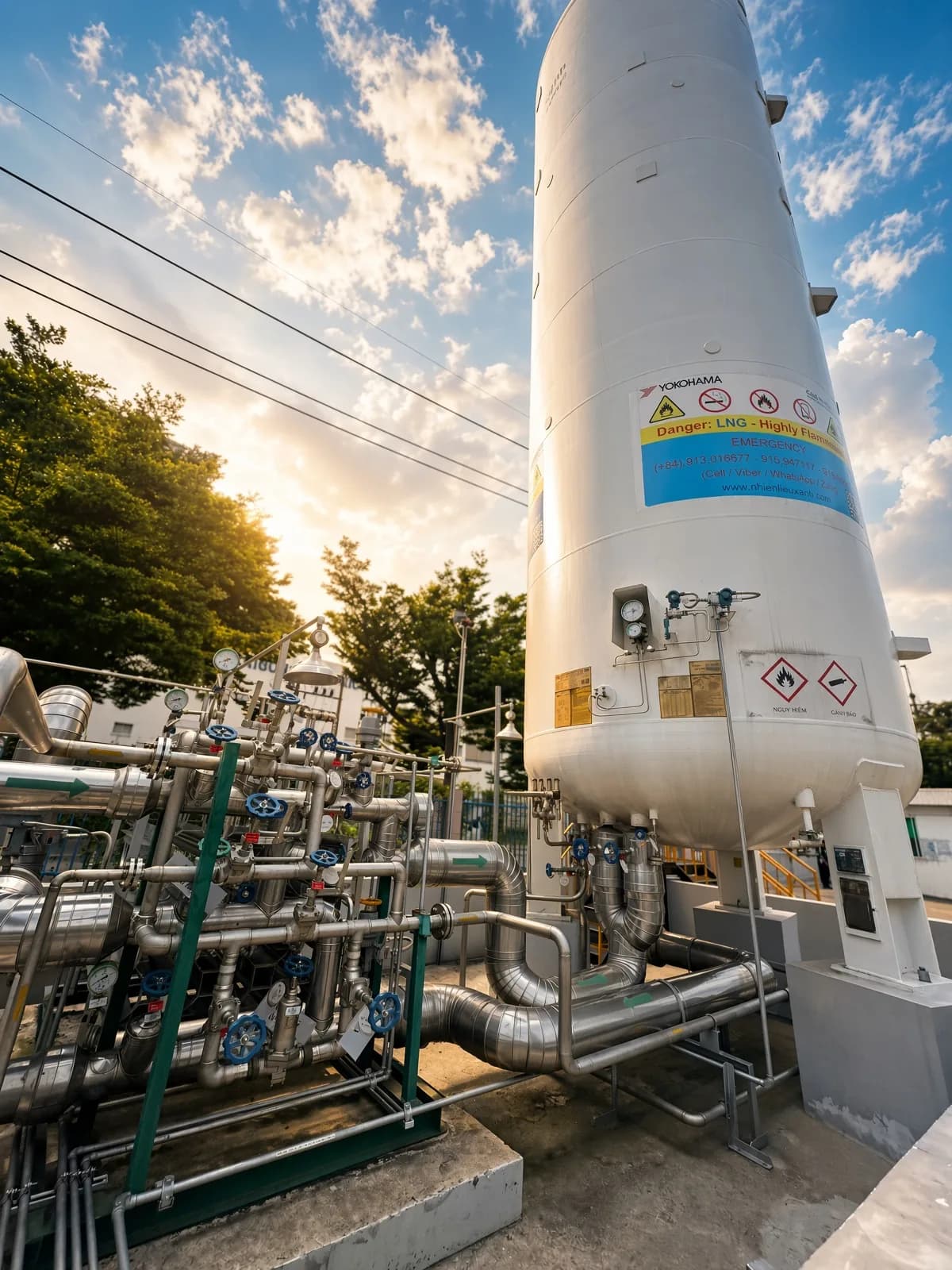
NLX supplies imported LNG with turnkey regasification stations and has a station that has completed installation and commissioning and is now operating at a foreign-invested factory in Vietnam.
Imported LNG supply and dedicated equipment.
High-calorific LNG burns completely and is supplied reliably under long-term contracts, helping plants plan fuel costs over several years instead of being exposed to short-term fluctuations.
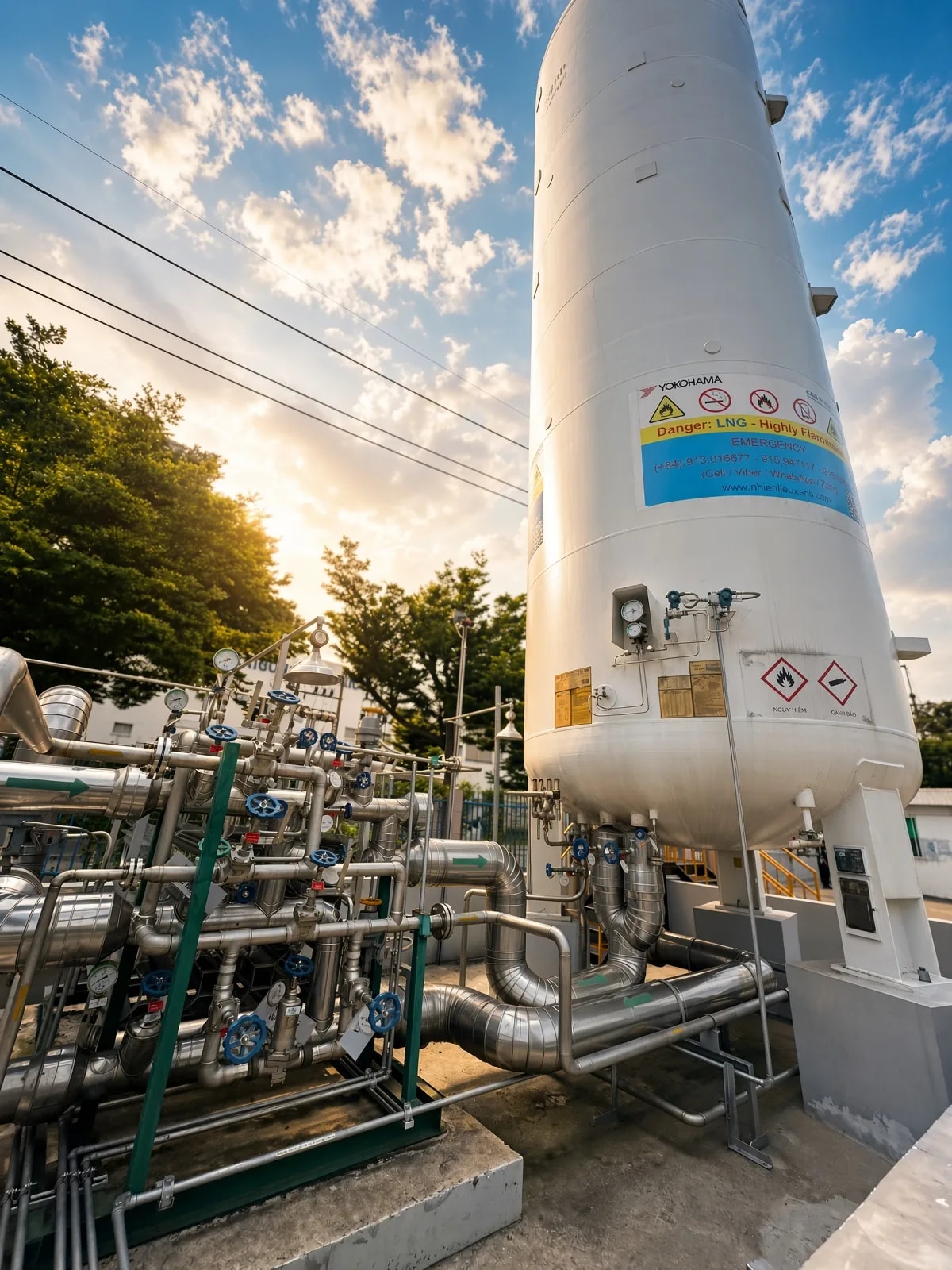
A turnkey satellite LNG regasification station converts liquid LNG at −162°C into gas for a plant. Capacity is calculated from actual consumption, with a modular design that can expand as output increases.
The NLX AI assistant assesses and classifies your needs and connects you with an LNG project engineer.
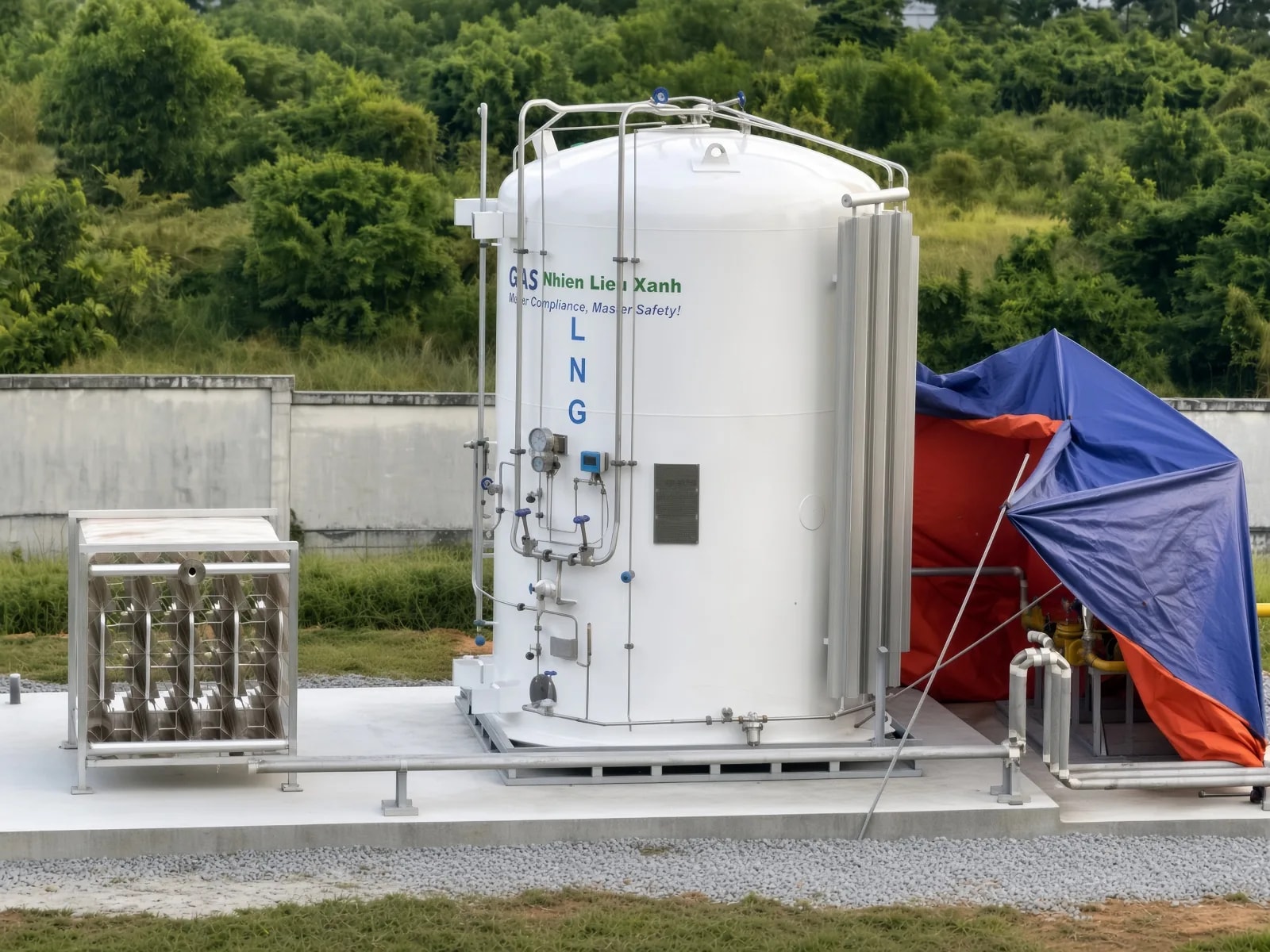
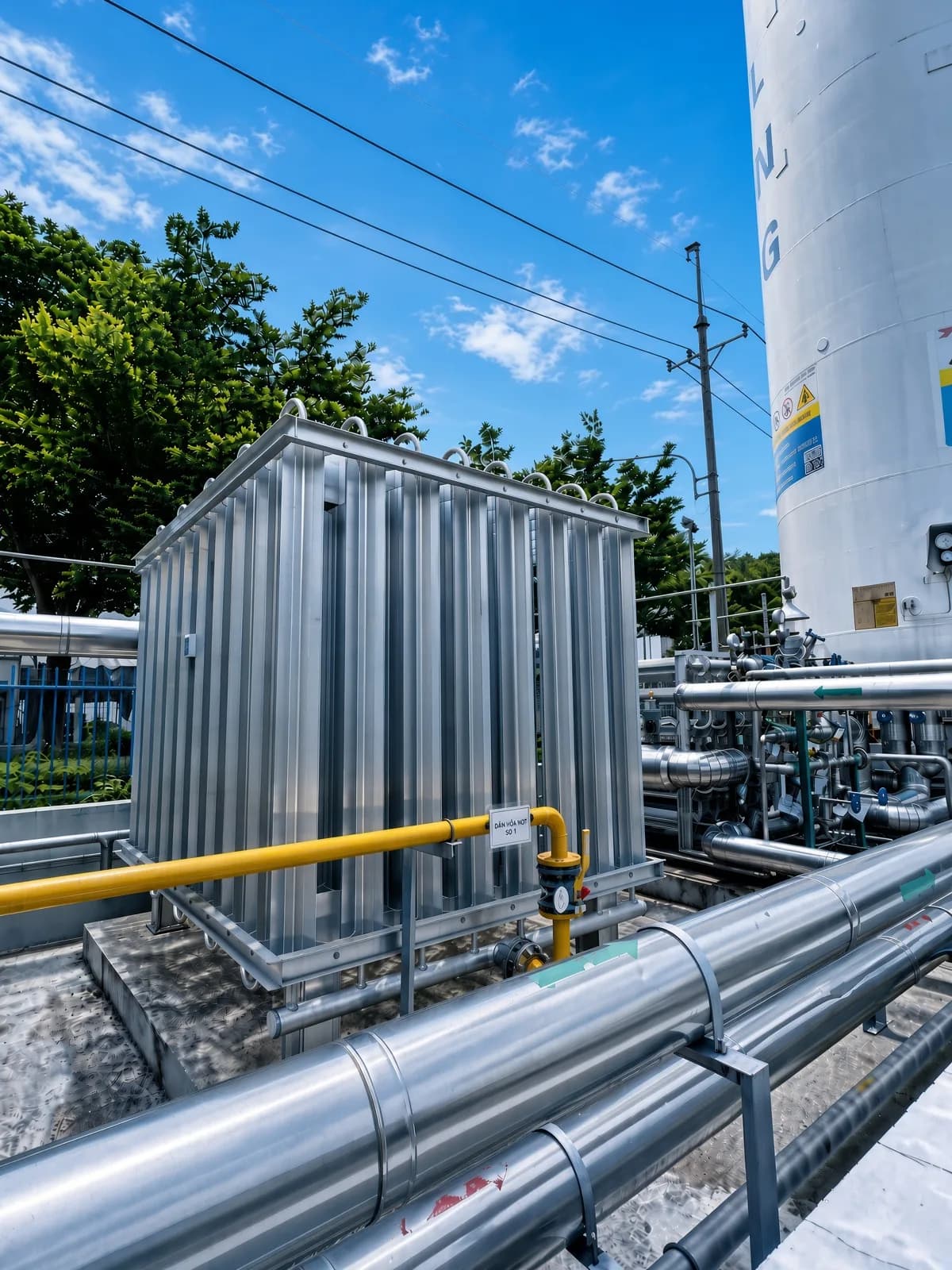
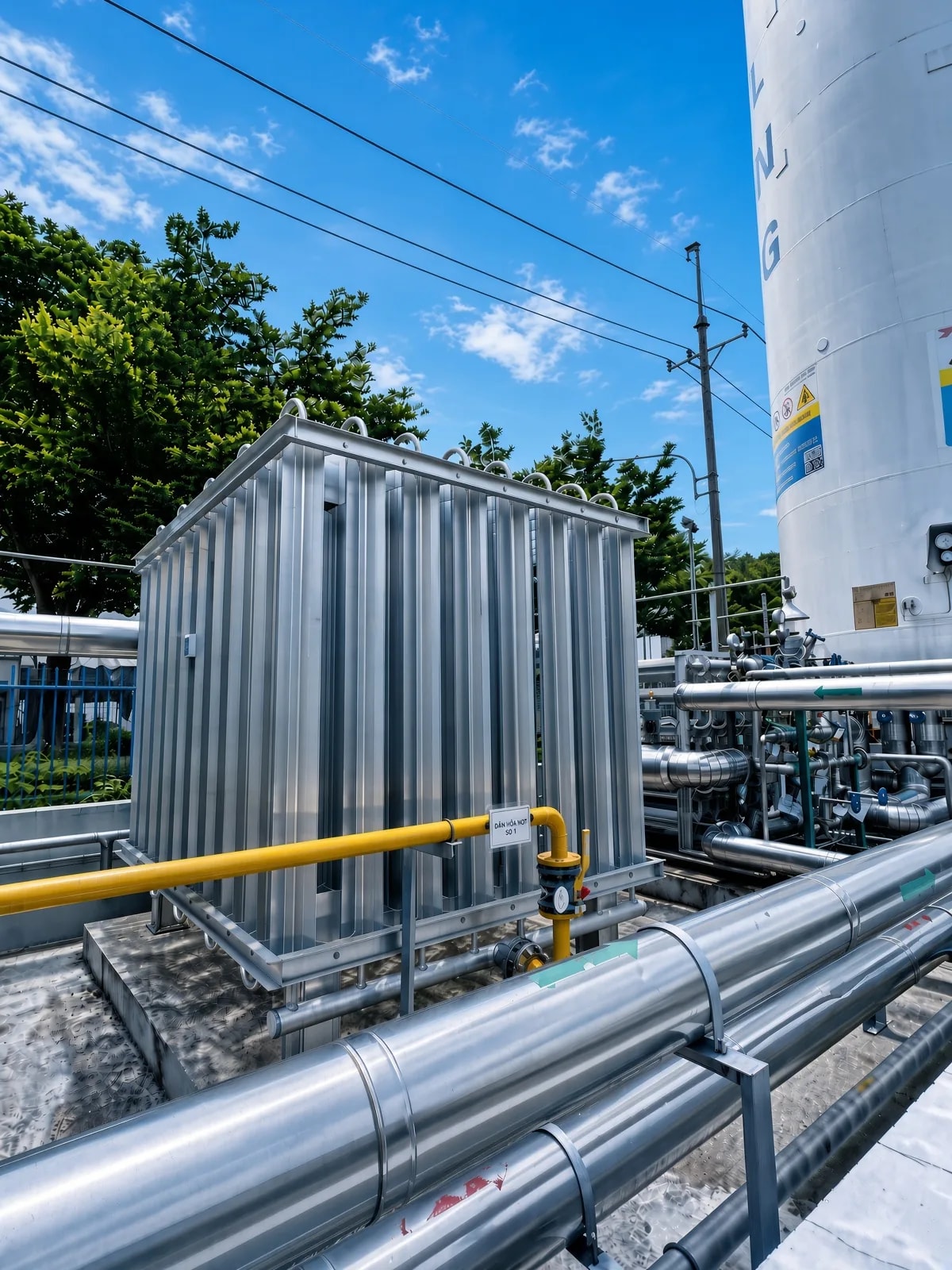
Double-wall vacuum-insulated tanks hold LNG at −162°C and limit boil-off losses during storage. Cryogenic vaporizer racks are correctly sized to consumption so kiln temperature does not fall between batches.
Control panels monitor pressure, cryogenic temperature and safety status in real time, issuing alarms and triggering emergency shut-off above thresholds without relying on an operator being on duty. They connect to the plant's existing SCADA/BMS.
Consulting, station construction and operation.
Assessment of actual energy demand, regasification-station design and a roadmap for converting from coal or fuel oil to LNG, including whole-lifecycle cost analysis rather than only the initial investment.
Construction of satellite LNG stations, including cryogenic tanks, vaporizer racks and gas-supply piping, commissioning and handover.
Station operation, periodic inspection of cryogenic equipment and training for the customer's technical team, because cryogenic equipment requires different handling from conventional LPG systems.
Solutions for large-scale production.
Replacement of coal and fuel oil in high-capacity boilers and kilns, reducing point-of-combustion emissions and stabilising heat quality.
A satellite LNG station supplies gas centrally to multiple plants in the same industrial park, sharing infrastructure costs.
Fuel for power generation and combined heat and power where both electricity and process steam are required.
Potential applications in industrial energy transition.
Ceramics — replacing coal with LNG helps stabilise firing quality and reduce emissions at the point of combustion.
Industrial parks — one satellite LNG station supplies multiple factories, reducing investment cost per consuming unit.
Textile dyeing — converting boilers to LNG provides cleaner operation and more stable heat.
NLX’s LNG safety guide is available for direct download without submitting personal information.
Quick answers about LNG: what liquefied natural gas is, its −162°C liquefaction temperature, how LNG compares with LPG and CNG, and when switching to LNG is beneficial.
LNG is primarily methane, cooled to approximately −162°C to reduce its volume and make transport to locations without gas pipelines practical.